


Your Readers are Out There, So Go Meet Them
Lots of good news and inspiration in the last few days! Book sales were up again for 2025, with unit sales reaching 3.15 Billion, according to Publishers Weekly. Adult fiction and nonfiction were among the top three segments leading the gains. And back in January, they reported that printed book sales had also gained for the second year in a row.
And in case you’re thinking its just a bunch of Boomers (like us) buying and reading all those books, multiple reports this year have noted the continuing growth among Gen Z and Millennials reading printed books and joining book clubs, with an April article on The Conversation reporting:
“In North America, an estimated 57 to 61 per cent of Gen Z and millennials identify as readers, averaging 3.5 to 4.5 books per year, with a preference for physical books. Younger readers are also more likely to purchase books in a bookstore and be active library users, which is notable in an era dominated by digital media. …
“… Among younger adults, interest in book clubs is growing: about 21 per cent of Gen Z and 29 per cent of millennials report belonging to one, but they’re putting their own spin on them.”
Those kinds of stories and stats warm my heart and give hope for the future, not just of books, but of humankind. And these are not new or fleeting trends. I wrote about the rise in reading by younger folks, including their attraction to book clubs, along with the growing influence of younger readers and authors via #BookTok and #Bookstagram almost two and half years ago (Who’s Reading All Those Books? Surprise!).
Not All Good News for Authors
Okay, so leave it to some in the publishing industry to find negatives in the news. An article by an editor at Barrett-Koehler lists “The 10 Awful Truths about Book Publishing” bemoaning the very growth in titles as making it harder for authors to sell books.
Yes, it’s reported that 4.2 million new books were published last year. And “only” 642,242 of those were published by traditional publishing houses. Meaning over 3.5 million were indie published. That is a lot of competition.
But the seeds of the solution for individual indie authors are found in those stats and stories about the growth in readership.
Readers are out there.
Your readers are out there.
How can you find them?
Do What the Cool Kids are Doing
In my post from 2024, I included a screenshot of BookTok and noted how young many of them are. If you spend some time scrolling both there and in the Bookstagram feeds, you’ll learn that they are populated by readers, reviewers, and lots of indie authors. They interact, share their latest reading, talk about their own writing projects, and cheer each other on.
The glue is their love of books.
Like any social gathering, there’s not much room for selling. But there is plenty of interest in what others are reading and writing. You can celebrate your progress while you’re writing your book. You can announce your release date, share pics from your launch party, and generally let people know what you’re up to.
You can do those things AFTER you’ve spent some time getting to know what others are doing. Find a recommendation for a book that sounds like one you’d enjoy and thank the person who made it. Go buy the book, read it, and circle back to thank them again, letting them and their audience know what you liked. Go find the author’s page and leave a glowing comment. Do a review of the book yourself.
Find ways to engage with their followers in their comment streams. Follow people. Provide value by answering a question, or asking a good one. This is not rocket science. It’s what you did to make friends from pre-school on. It’s what you did at networking events before the internet, if you’ve been around that long.
I know, I know. You just want to write. Get over that. We’ve been telling you for years that publishing a book is starting a new business, or a new division of your existing business. That doomsday article from Barrett-Koehler explains that even for established authors at traditional publishers:
“Most book marketing today is done by authors, not by publishers. … In recognition of this reality, most book proposals from experienced authors now have an extensive section (often ten to thirty pages) on the authors’ marketing platform and what the authors will do to publicize and market the books … [and] whether the books [sell] depends primarily on how authors support their books.”
Four More Places to Meet Your Readers
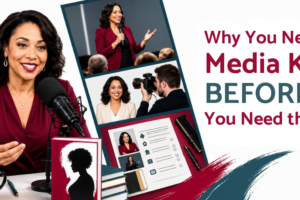
If you paid attention to the graphic at the top, you saw several examples for in-person and virtual meetups.
In-person Conferences
I got inspiration for this one from two more inbox items this week. First, daughter Chloe DiVita wrote a post on LinkedIn about a photo she took at a SuperZoo conference back in 2017, when she, Yvonne, and I were running the pet conference and community, BlogPaws (actually, I had “retired” from BlogPaws by then). The photo was of an exhibit by the Pet Sustainability Coalition. Chloe met some of the leaders of the group. And this year she joined them and is now Director of Growth & Membership.
Now that I think about it, our whole excursion into the pet industry traces back to a conference. We’d been promoting blogging as a book marketing tool for our clients and Yvonne was invited to speak at the Word of Mouth Marketing Association conference in Orlando in 2006 or 2007. She happened to sit next to a marketing executive from Purina and struck up one of those sidebar conversations that happen at conferences, if you let them.
That led to a gig blogging for Purina, which introduced us to the growing pet social media community. Another conversation with some pet bloggers at a BlogHer conference in 2009 led us to founding BlogPaws. Years later, we count many of those we met through the annual BlogPaws conferences as friends. And they know we’re back in the book business, so when Judy Weiss wanted help getting her ebook cover to look the way she envisioned, she came to us and even allowed me to use the process for a training video.
Point being: you can begin real, long-lasting relationships at conferences that can develop into valuable opportunities for you and your book.
Then, I got a newsletter email from Dave Chesson over at Kindlepreneur — note the “book as business” flavor of that title — in which he explains another value he gets from going to conferences: he gets validation that he’s not alone in what he’s doing and in the struggles he’s experiencing. But in the online version, he adds:
“One of the greatest benefits of attending conferences wasn’t found in the sessions. It was the people I met. Over the years, I’ve built friendships with authors I still talk to today. They became people I could celebrate wins with, ask for advice, or simply vent to when things weren’t going well.”
You can bet, too, that those relationships help him sell books. He partners with some of them for educational summits and I’m sure they buy and recommend his books, courses, and related business ventures.
The goldmine in his article (link above), though, is the list of 20 book industry conferences, both in-person and online, that you may want to consider attending. He follows that with tips on how to prepare, what to do at the conference, and follow-up.
Online Groups and Events
These can be specific to writing and publishing, or more general business related groups. We’re members of book industry groups like the Alliance of Independent Authors, which has a bookstore where members can list their books, the Independent Book Publishers Association, and the Nonfiction Authors Association. These groups offer regular online meetings, courses, certifications, online conferences, and more.
The key to getting value from them is to participate and provide value to others from your own experience and expertise. As Dave Chesson noted, sometimes that can be from sharing the writing and publishing challenges and frustrations you’re going through that lets others know they’re not alone. From my experience, that often leads to brainstorming with the group and finding solutions together that benefit all.
The possibilities for groups relevant to your specific writing and publishing goals are vast. A simple Google search for “online writers groups” turned up more that 20 pages of results. You can customize your own search to focus the results. One that came up in my general search is an article on Writers.com entitled “Best Online Writing Communities: How to Find Your Writers Group.”
I’ve not been involved with any of those listed, but Shut Up & Write jumped out at me as echoing the Silent Book Club movement (we’ll get to book clubs in a moment). If you’re still struggling with that “I just want to write” mindset, finding a Shut Up & Write local or online session to attend might be a great place to start.
On the general business group front, you may have noticed me occasionally mentioning the BOSS Academy group that Yvonne and I attend weekly. It’s a think tank or mastermind gathering of business owners from a wide range of industries. We value the experience, insights, and wisdom that flows in every meeting. And the friendships that have grown. But over the years we’ve also gained referrals, as well as two book clients directly from the membership, David Schneer and Katie Wrigley, and the co-author of my latest book, Michele Molitor.
The paths to book marketing success can be long and winding, as the song goes. But they often start with finding your people and joining in.
Book Clubs
This one is a bit more directly related to selling your book, though it can also start those long-term relationships that lead to wider opportunities. Yvonne recently explained why book clubs can be valuable for nonfiction authors, not just novelists. The idea here is to find book clubs that focus on your genre and make your book — and yourself — available to them. If they choose your book, you may get a dozen or more sales.
But if they invite you to join in on the discussion of your book, you also get the opportunity to form direct relationships with your readers. And that can give you a fan base with a dozen or more of them recommending your book(s) to others.
Rinse and repeat, and you can do what Allen Levi did to help make his indie published Theo of Golden a runaway bestseller. I covered his journey in an earlier post, but one of the main things his “marketing department” (i.e., his niece) did was search for book clubs (using Facebook) and had him visit all those within driving distance that would have him.
A year and a half in, after a slow start, they were selling 1,000 copies a day. The traditional publishing world took notice and — against his niece’s advice, because he’d earn less in royalties — he sold the rights. But that opportunity happened because he got out there and met his readers.
Finding book clubs relevant to your book is a place where AI can help. Check out the “fan-finder prompt” I wrote about last year and get going!
Podcasts
In her post last week about getting reviews for your book from sources other than Amazon, Yvonne put podcasts at the top of her list. She noted the value of having other people talk about your book as part of your review strategy.
Now, you could start your own podcast relevant to your book’s topic, much as we started out urging our clients to start their own blog 20+ years ago. For a while, they even used the term “vlog” for blogs that posted video as much as written content. Hosting and inviting other experts and authors in your genre can be a great way to build your audience by sharing theirs (guests should always be asked and willing to promote their appearance to their audiences).
But more in line with attending conferences, online groups, and book clubs (both in-person and virtually), a primary target for your efforts should be guesting on other people’s podcasts. The host will introduce you as the author of your book(s) and likely spend some time describing your message. These become testimonials for the book and endorsements of your expertise.
Once again, I’ll send you to the fan-finder prompt post, where I asked Perplexity to include podcast hosts relevant to our client’s murder mystery series and it found excellent examples. While the prompt I drafted asked for lists of several different book marketing targets (e.g. book clubs, events, podcasts) to find five of each, I’ve learned it may be even more effective to break it down and have your favorite AI search for them separately and generate longer lists of each.
So there you have it. Books are selling in the billions. Your readers are out there. Go find them, and the multi-faceted opportunities and rich relationships that can flow to you years from now.



Leave a Reply